

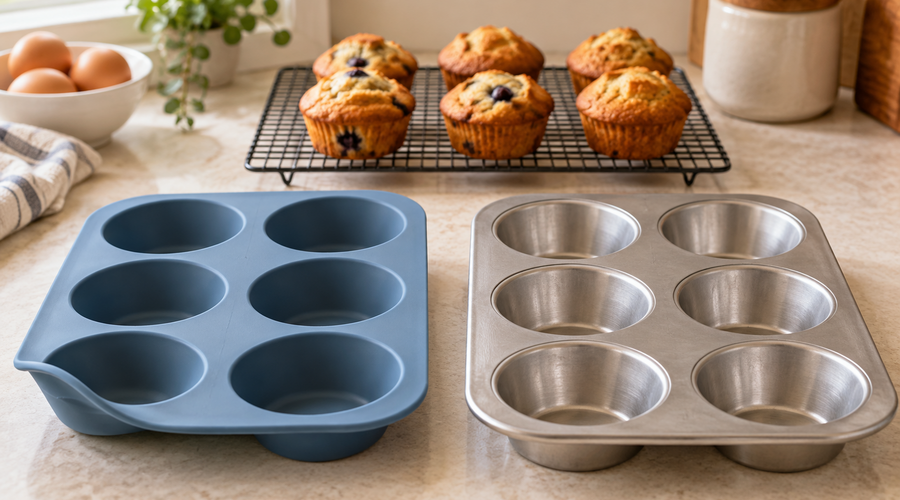
Choosing a muffin pan can feel like a small decision until you're standing in the baking aisle wondering whether silicone or metal will make your next batch easier.
Both can make lovely muffins, but they handle heat, release baked goods, and feel different to use. Here's what to know before you choose the one that suits your kitchen.
How They Handle Heat
One of the biggest differences is how each material handles oven heat.
Metal conducts heat efficiently, helping muffins brown and develop lightly crisp edges. Silicone heats more slowly, so muffins may come out paler and softer around the edges. Depending on the recipe and your oven, they may also need a little extra baking time.
If you love a golden top and a bit of colour around the edges, a metal pan may be more to your taste. As always, follow your recipe's doneness cues rather than adding time automatically.
Handling in the Kitchen
Metal pans are rigid, so they're easy to fill and carry to the oven.
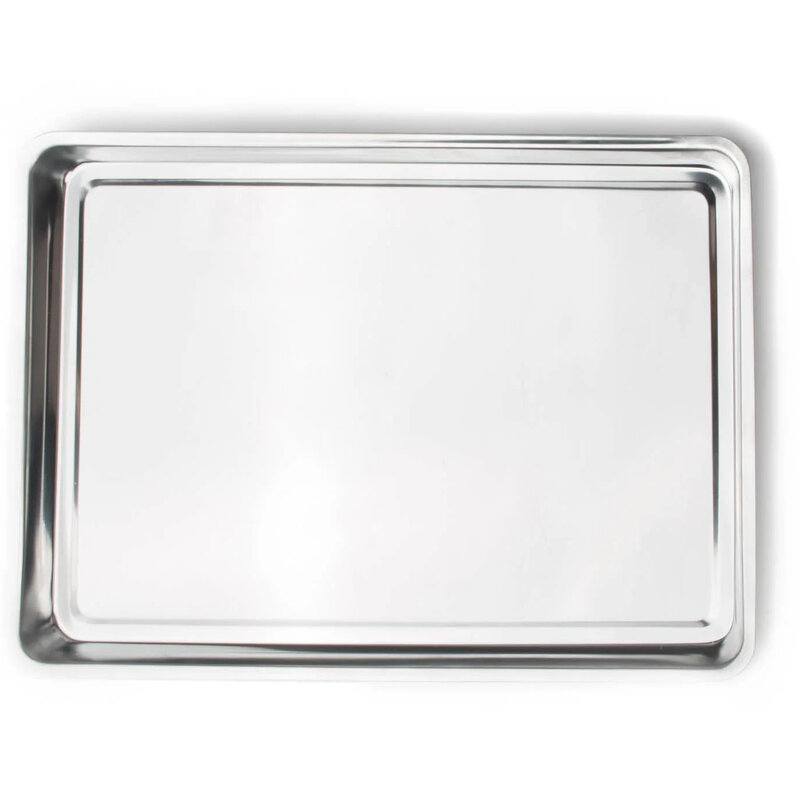
Silicone pans are flexible, which can make it easier to release baked goods, but that flexibility can be awkward when the cups are full of batter. Set a silicone pan on a sturdy baking sheet before filling it, and keep it on the sheet when moving it into and out of the oven. It gives the pan the support it needs and helps prevent spills.
Release and Cleanup
Silicone's flexible surface can make it easier to pop muffins out, and many recipes release without greasing. For sticky or sugary batters, check the pan manufacturer's instructions to see whether a light coating is recommended.
Metal pans, including non-stick ones, often benefit from a little butter or baking spray, especially around the sides of each cup. If you've read our post on why muffins keep sticking to the pan, you know that preparing the pan properly can make a big difference.
Both types are usually straightforward to clean. Use warm water and a soft sponge, and follow the care instructions for your particular pan.
Durability and Everyday Care
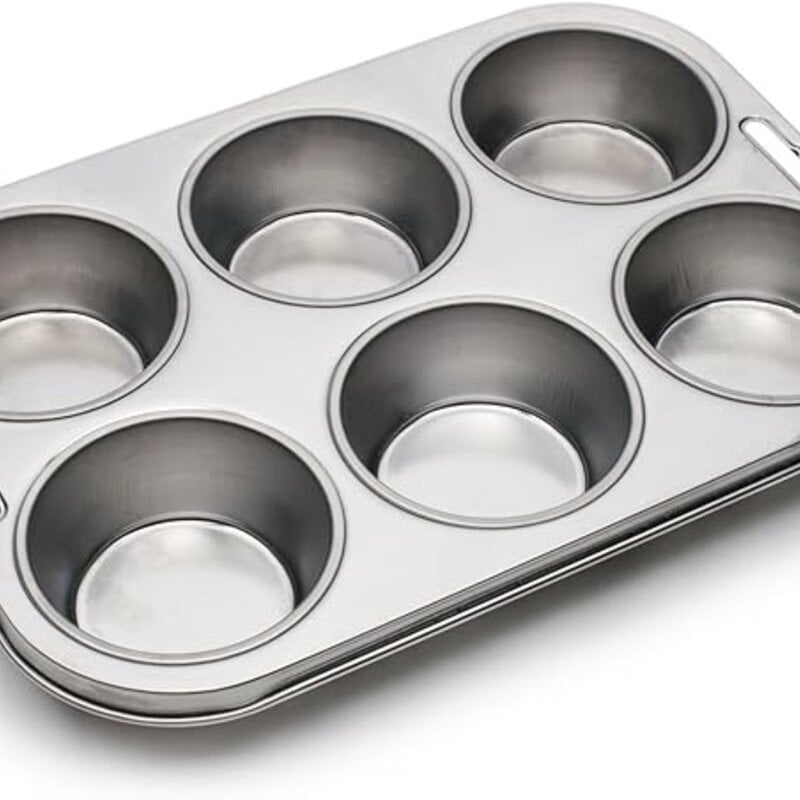
A sturdy metal pan can keep its shape through years of regular baking. If it has a non-stick coating, gentle care, like using non-metal utensils and avoiding abrasive scrubbers, can help protect the surface.
Silicone is lightweight and won't dent the way some metal pans can, but it isn't indestructible. It can be cut or torn by sharp tools, and its flexibility means it needs support when full. Check the manufacturer's care and temperature instructions for either type.
Silicone vs. Metal: Quick Comparison
| Feature | Silicone | Metal |
|---|---|---|
| Browning | Often paler, soft edges | Usually more golden, slightly crisp edges |
| Heat | Heats more slowly | Conducts heat efficiently |
| Handling | Flexible, needs support underneath | Rigid and easy to carry |
| Release | Often releases easily; greasing depends on recipe | Usually benefits from greasing |
| Care | Avoid cuts and follow care instructions | Protect non-stick coating from scratches and abrasives |
So, Which One Should You Choose?
If you bake muffins regularly and love a golden finish, a metal pan may be a good everyday choice. If easy release is your main priority, silicone may be worth considering, especially for delicate bakes that can be tricky to remove.
Some home bakers like having both on hand for different recipes. There's no one right answer; it comes down to what you bake most and what feels easiest to use in your kitchen.
Come Talk to Us About It
Choosing bakeware isn't about finding the “best” material for everyone. It's about finding what works for the muffins, cupcakes, and quiches you actually make.
We carry non-stick and stainless steel muffin pans in our Cupcake & Muffin Pans collection, and we're always happy to walk through the options with you in person.
If you're using a metal pan, our guide on the right way to grease a muffin tin covers exactly how to get a clean release.
Stop by Heart of the Home in Edmonton and tell us what you love to bake. We'll help you find the pan that fits your kitchen.
Frequently Asked Questions
Is silicone or metal better for muffins?
Both can work well. Metal generally helps muffins brown more, while silicone can make release easier. Think about whether browning, convenience, or ease of handling matters most to you.
Do silicone muffin pans need to be greased?
Usually not. Silicone's natural non-stick surface releases most muffins without any greasing, though a very light coating never hurts for sticky or high-sugar batters.
Are silicone muffin pans safe to bake in?
Food-grade silicone bakeware is considered safe for oven use within its rated temperature range. Check the manufacturer's guidance for the specific heat limit of your pan.
Which lasts longer, silicone or metal?
Well-cared-for metal pans, especially stainless steel, tend to hold their shape and performance for years. Silicone resists cracking and dropping damage but can tear over time. Lifespan depends on the pan and how it's used and cared for.
Can I use a silicone muffin pan without a baking sheet underneath?
It depends on the design. Flexible silicone pans generally need a sturdy baking sheet underneath for support when filling and transferring them. Some models, like Trudeau silicone muffin pans with a metal support frame, are designed to be carried without an extra baking sheet. Check your pan's instructions to be sure.
Leave a comment