

There comes a time when every well-loved pan has to retire.
Maybe your morning eggs aren't sliding around quite like they used to. Maybe the cooking surface has picked up a few scratches, or you're noticing the coating beginning to peel.
Non-stick cookware won't last forever, but that doesn't mean every little mark means it's time for a new pan. Here's what to look for when you're deciding whether your favourite pan still has plenty of cooking left in it, or whether it's ready for retirement.
Deep Scratches or Exposed Metal
A few light marks from everyday cooking aren't necessarily a reason to worry. What you want to pay attention to is deeper damage.
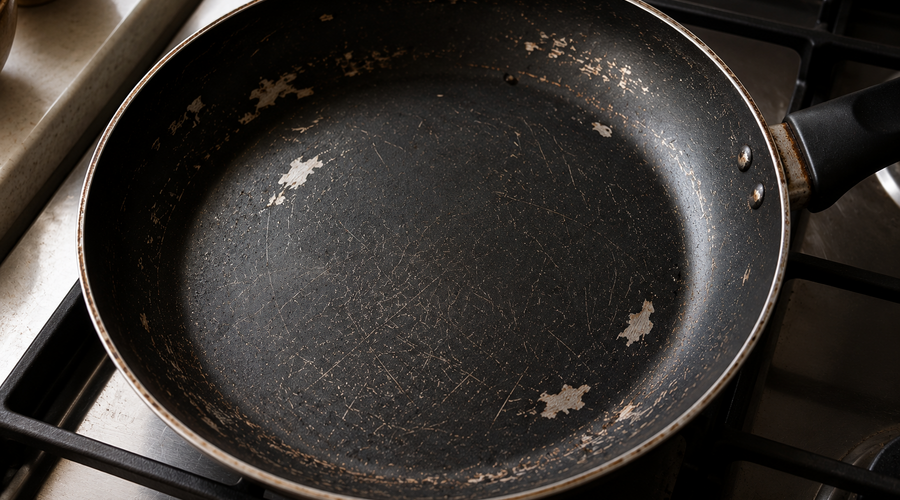
If the coating has been scratched through and you can see the metal underneath, it's a good indication that the pan has reached the end of its useful life.
One of the best ways to prevent those scratches in the first place is to use wood, silicone, or nylon utensils with your non-stick cookware.
If your utensil drawer could use an update, our kitchen utensils include plenty of non-stick-friendly options for everyday cooking.
Peeling, Flaking, or Chipping
If the coating is visibly peeling, flaking, or chipping, it's time to replace the pan.
Non-stick coatings aren't designed to be repaired once they've started to come away from the cooking surface. Rather than trying to get a few more meals out of a pan with a damaged coating, it's best to retire it and choose a new one.
Think of it as giving your trusty old pan a well-earned send-off.
Dark or Stubborn Buildup
Not every dark mark means your pan is finished.
Non-stick cookware can develop some discoloration over time, especially with regular use. What you want to look for is stubborn buildup that affects the cooking surface or simply won't come clean with gentle washing.
Before declaring your pan officially retired, try soaking it in warm, soapy water and cleaning it with a soft sponge. Avoid abrasive scrubbers or aggressive scrubbing, which can do more harm than good.
If the surface is still smooth and the coating is intact, a little discoloration may simply be a sign that your pan has been well loved.
Food Is Starting To Stick
This is probably the easiest sign to notice.
One of the reasons we love a good non-stick pan is how effortlessly food releases from the surface. If your eggs are suddenly sticking, pancakes are becoming a wrestling match, or you're reaching for more and more butter and oil just to keep dinner from attaching itself to the pan, the coating may be nearing the end of its life.
A little sticking doesn't always mean the pan is finished, cooking temperature, cleaning, and the type of food you're preparing can all make a difference.
But if you've tried adjusting your cooking habits and the pan simply isn't performing the way it once did, it may be time for a replacement.
Your Pan Has Started to Warp
Place your pan on a flat surface and give it a little wiggle.
If it rocks or no longer sits flat, it may have warped over time. Sudden temperature changes, such as putting a very hot pan directly into cold water, can contribute to warping.
A warped pan won't heat as evenly and can make everyday cooking more frustrating than it needs to be.
Your pan doesn't have to look brand new to be useful, but it should still sit flat and cook the way you expect it to.
Not Every Mark Means It's Time to Say Goodbye
This is an important one.
A pan can look a little tired and still have plenty of life left in it.
Minor surface marks, a change in colour or a finish that's not quite as shiny as the day you brought it home aren't necessarily reasons to replace it.
If the cooking surface is intact, food is still releasing well and the pan is sitting flat, keep cooking.
After all, cookware is meant to be used. A few signs of a well-loved kitchen are nothing to be ashamed of.
If you're curious about how different non-stick coatings compare, our guide to ceramic vs. traditional non-stick pans is a great place to start.
How Long Should a Non-Stick Pan Last?
There's no magic number.
The lifespan of a non-stick pan depends on the cookware itself, how often you use it and how you care for it. Using moderate heat, non-stick-safe utensils, gentle cleaning methods and proper storage can all help extend its useful life.
Rather than replacing your pan simply because you've had it for a certain number of years, pay attention to how it's actually performing.
And if you'd like a few simple habits to help your next pan last as long as possible, our guide to caring for your non-stick cookware has you covered.
Is It Time for a New Pan?
If your non-stick pan has peeling or flaking coating, deep scratches that expose the metal, significant warping, or has simply stopped performing the way it should, it may be time to let it go.
When you're ready for a replacement, browse our non-stick cookware collection online.
Or better yet, come see us at Heart of the Home in Edmonton.
Tell us what you're cooking, what kind of cooktop you have, and what you're looking for in a pan, and we'll help you find something that fits your kitchen.
Sometimes the best way to choose a new pan is simply to pick it up and see how it feels in your hand.
Frequently Asked Questions
How often should you replace a non-stick pan?
There's no fixed schedule. Replace it when you see the warning signs above (deep scratches, peeling, or food sticking even with oil) rather than on a set timeline. Some pans last years, others need replacing sooner depending on care and quality.
Is it safe to cook with a scratched non-stick pan?
Light surface scratches are generally fine. Deep scratches that expose the metal underneath are not, since they can flake into food and mean the coating's protection is already compromised in that spot.
What is hardest on non-stick cookware?
High heat, metal utensils, abrasive cleaning tools, and sudden temperature changes can all shorten the life of a non-stick coating.
The good news is that most of these are easy to avoid: use moderate heat, choose non-stick-safe utensils, and clean your cookware gently.
Can a non-stick pan be recoated?
Some cookware manufacturers may offer repair or recoating options, but this varies by brand and product.
For most home cooks, replacing a pan with a damaged coating is the more practical option. If you're unsure what to do with a particular piece, check the manufacturer's recommendations or bring it into Heart of the Home and we'll help you figure out your options.
Leave a comment