


A good non-stick pan can become one of the most-used pieces in your kitchen, and a little care goes a long way in keeping it performing its best. Most of the wear doesn't come from age; it comes from a handful of everyday habits that are easy to fix once you know what to look for. Here's what actually makes a difference.
Choose Your Utensils Wisely
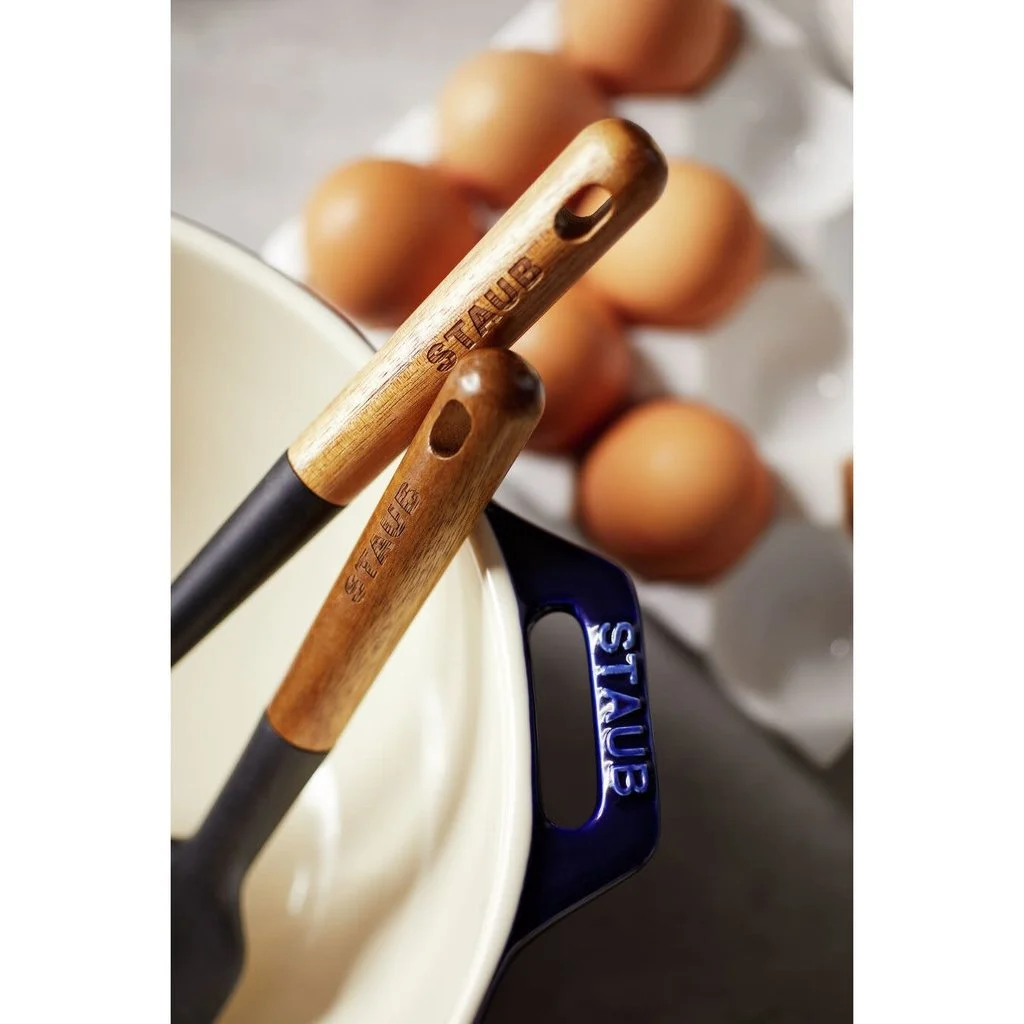
Metal spatulas, whisks, and tongs are the fastest way to scratch a coating. Even careful use adds up over months of cooking. Switch to wood, silicone, or nylon utensils, and you remove the single biggest cause of early damage. If your current set is mostly metal, our kitchen utensils are all non-stick safe, so it's an easy swap.
Keep the Heat Moderate
Non-stick cookware doesn't need high heat to do its job. For most everyday cooking, like eggs, pancakes, grilled cheese, vegetables, and delicate foods, low to medium heat is all you need. Higher temperatures aren't necessarily going to get dinner on the table faster, and using moderate heat is a gentler approach to caring for your cookware. A little patience on the stovetop can go a long way.
Don't Preheat an Empty Pan for Too Long
It's easy to turn on the burner and then get distracted chopping vegetables or getting the rest of dinner ready. With non-stick cookware, it's better to avoid leaving an empty pan heating for an extended period. Add your ingredients, oil or butter, as appropriate for your recipe, rather than allowing the pan to sit empty over a hot burner. It's one of those little kitchen habits that is easy to get into.
Give Your Pan a Chance to Cool
After dinner, it's tempting to take a hot pan straight from the stovetop to the sink. Instead, let it cool down for a few minutes before washing. Moving cookware from very hot to very cold water can cause thermal stress and may contribute to warping over time. Your pan has just finished making dinner; give it a little break before cleanup.
Keep Cleaning Simple
For stubborn bits of food, let the pan soak for a little while rather than reaching for a heavy-duty scrubber. A gentle approach is usually the better one. A soft sponge and warm, soapy water is usually all a non-stick pan needs. Save the steel wool and abrasive scrubbers for cookware that can actually handle them, like cast iron or stainless steel.
And when it comes to the dishwasher, always follow the care instructions for your particular cookware. Some non-stick cookware is dishwasher safe, while hand washing can be the gentler option if you're looking to maximize the life of the coating.
If a pan has stubborn burnt-on residue, a paste of baking soda and water left to sit for a few minutes (rather than scrubbed hard right away) will lift most of it without damaging the coating.
Store It So Nothing Rubs Against the Coating
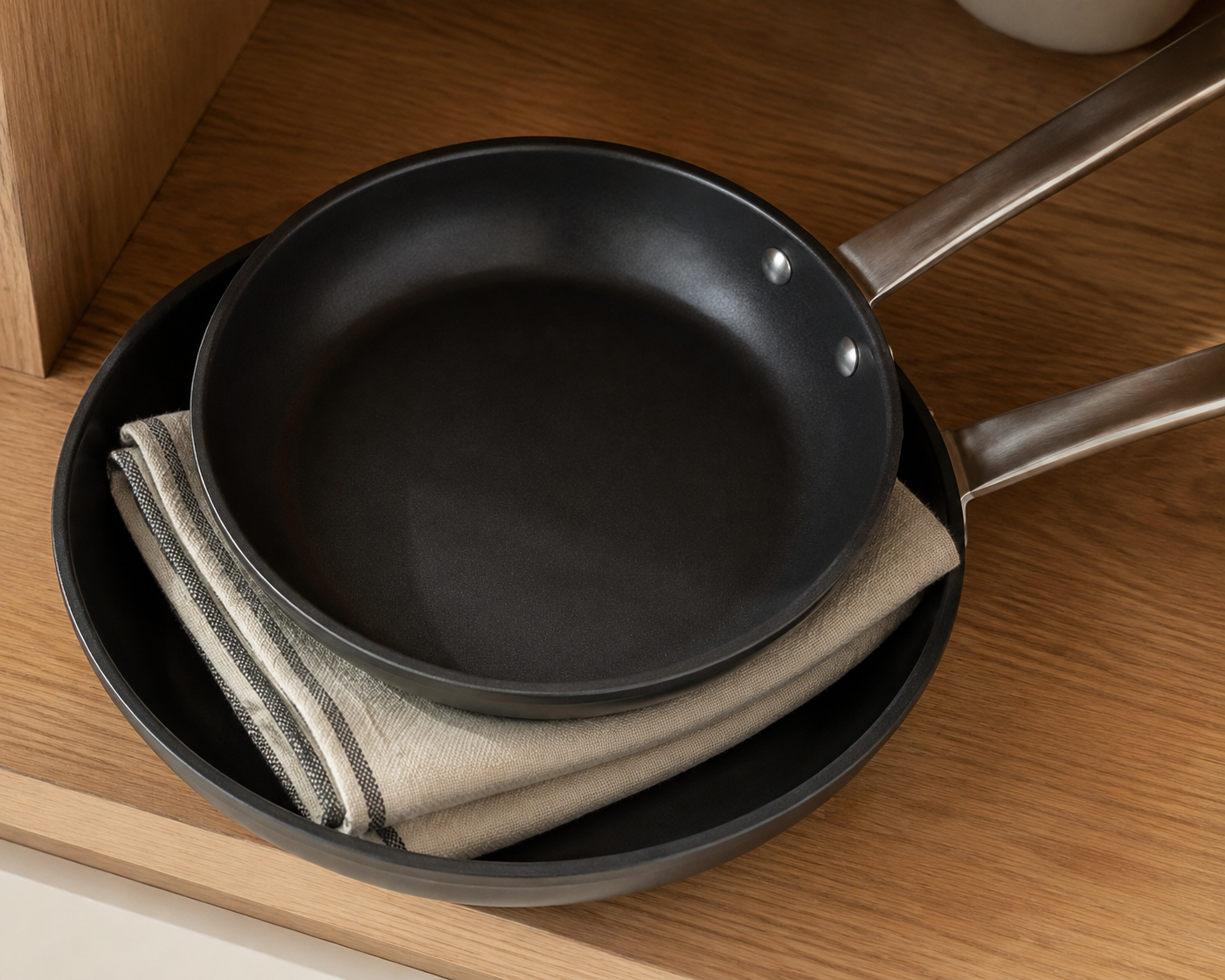
Stacking pans directly on top of each other is one of the quieter ways coatings get scratched, since the bottom of one pan rubs against the surface of the one underneath every time they're moved. A folded dish towel, paper towel, or a proper pan protector between stacked pans can help prevent unnecessary scratching. It's a tiny step that takes almost no time.
Skip the Aerosol Cooking Sprays
This one comes up often. Some aerosol cooking sprays can leave a sticky residue on non-stick cookware when they're used regularly. Over time, that buildup can become difficult to remove without scrubbing. For everyday cooking, a small amount of oil or butter applied directly to the pan is a simple alternative. As always, follow the care recommendations provided with your specific cookware.
A Little Care Goes a Long Way
Taking care of your non-stick cookware doesn't require a special cleaning routine or a cupboard full of products. Use non-stick-friendly utensils, cook over moderate heat, avoid prolonged heating of an empty pan, let it cool before cleaning, and give the cooking surface a little protection when storing it. Most importantly, enjoy your cookware.
After all, the best pan isn't the one sitting perfectly untouched in the cupboard; it's the one you're reaching for every day.
If your current non-stick pan has seen better days, our guide to the signs it's time to replace your non-stick pan can help you decide what to look for. Trying to decide between ceramic and traditional non-stick? Take a look at our guide to ceramic vs. traditional non-stick cookware to find the option that best suits the way you cook.
And if you're ready for a new pan, explore our non-stick cookware collection online or visit us at Heart of the Home in Edmonton. We'd be happy to help you find the right pan for your kitchen and talk through how to care for it once you get it home.
Frequently Asked Questions
How long should a non-stick pan actually last?
With proper care, most non-stick pans hold up well for three to five years. Pans that are run through the dishwasher, cooked on high heat, or scrubbed with metal tools often need replacing well before that.
What's hardest on non-stick cookware?
High heat, metal utensils, abrasive cleaning tools, and prolonged heating of an empty pan can all be hard on a non-stick coating. The simplest approach is to use moderate heat, non-stick-safe utensils, and gentle cleaning methods.
Do I need special cleaning products for non-stick pans?
Not usually. Warm water, a mild dish soap, and a soft sponge handle almost everything. Baking soda paste works well for stubborn residue without needing anything abrasive.
Is it okay to use cooking spray on a non-stick pan?
Occasional use is fine, but regular use leaves a sticky buildup that's hard to remove. A thin layer of oil applied by hand does the same job without that residue.
Leave a comment