

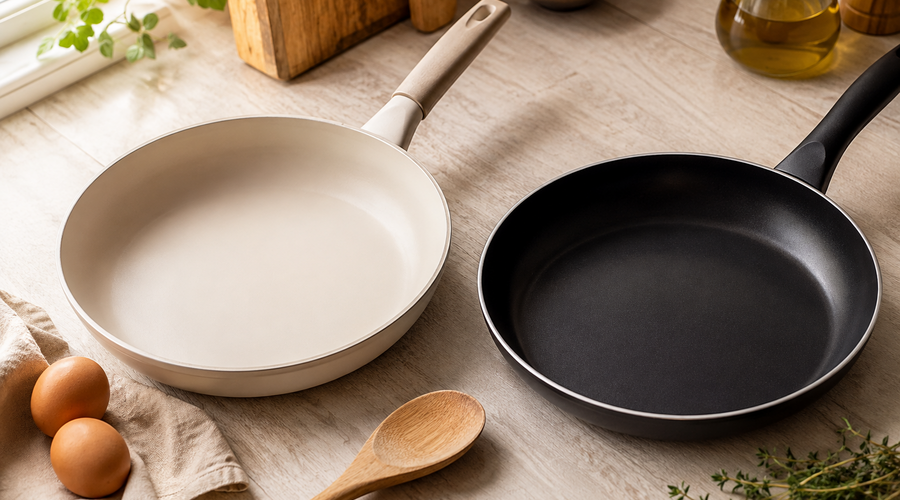
If you've ever stood in front of a wall of cookware wondering, "Okay… but which pan should I actually buy?" you're not alone.
Ceramic and traditional non-stick cookware can both make everyday cooking easier, especially when you're making eggs, pancakes, fish, or anything else you'd rather not scrape off the bottom of your pan.
So what's the difference?
The answer isn't that one is better than the other. They simply have different strengths, and the right choice comes down to how you cook and what matters most to you.
Let's break it down.
What Is Ceramic Cookware?
Ceramic cookware isn't usually made entirely from ceramic. Most ceramic non-stick pans have a metal base, often aluminium, with a ceramic-based coating on the cooking surface.
One of the biggest reasons people choose ceramic cookware is the coating itself. Ceramic coatings don't use PTFE, making them a popular choice for cooks who prefer to avoid traditional synthetic non-stick coatings.
They're also available in some beautiful colours and finishes, which means your cookware can be just as much a part of your kitchen style as it is a cooking tool.
What Is Traditional Non-Stick Cookware?
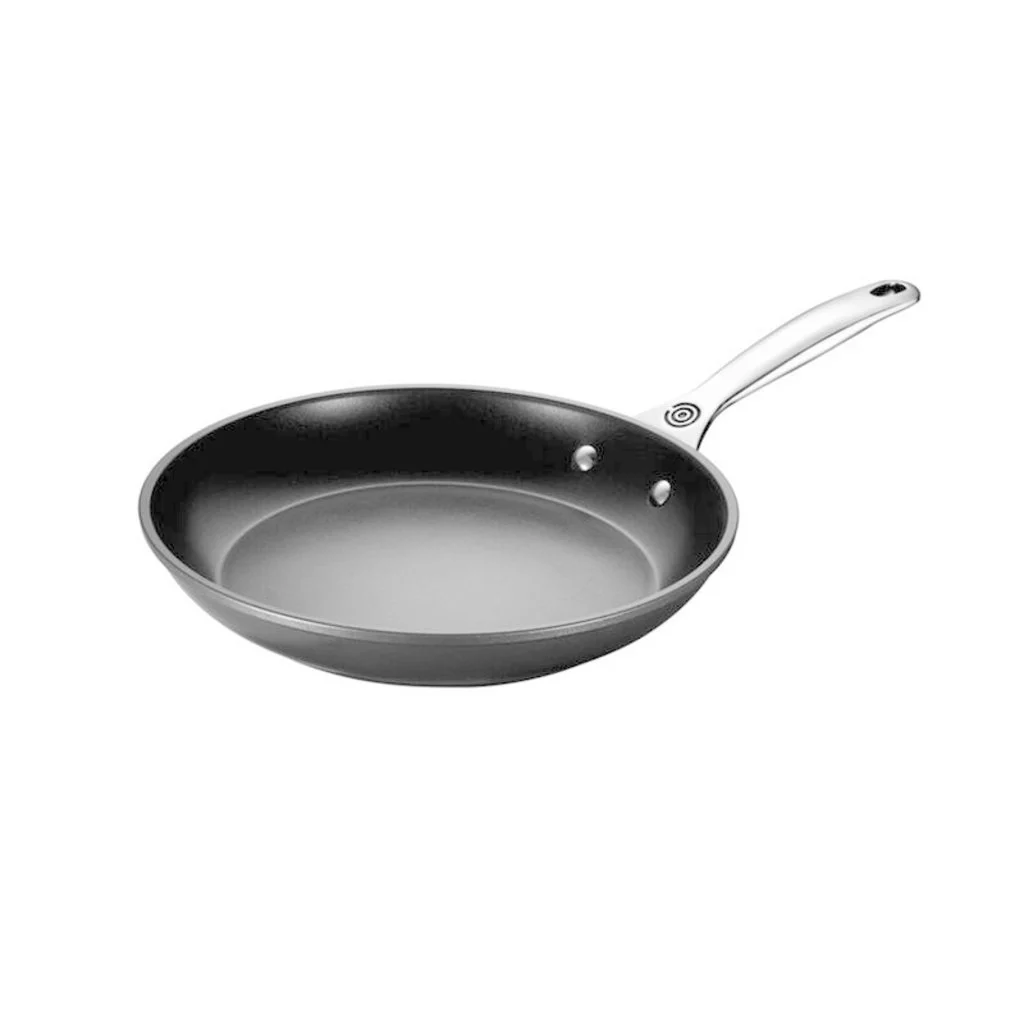
Traditional non-stick cookware uses a coating such as PTFE over a metal base. The smooth cooking surface is designed to help food release easily, which is especially handy for foods like eggs, pancakes, and delicate fish.
Modern quality non-stick cookware is made without PFOA, a chemical that was historically used in the manufacturing of some older non-stick coatings.
For everyday cooking, traditional non-stick is popular because it provides consistent food release and is relatively easy to care for.
How Do They Perform in the Kitchen?
Both ceramic and traditional non-stick cookware can be wonderfully easy to cook with when they're new and properly cared for.
Think:
- Eggs that slide right out of the pan
- Pancakes that flip without a fight
- Fish that releases without leaving half of itself behind
- Less oil or butter when you're cooking
- Much easier cleanup
The difference tends to become more noticeable with time.
Traditional non-stick cookware is generally known for maintaining its non-stick performance for longer with proper care, while ceramic coatings can gradually lose some of their slickness.
That doesn't make ceramic a bad choice, it simply means it's worth thinking about what matters most to you before you buy.
What About Durability?
Neither type of cookware is indestructible, and both benefit from a little TLC.
Using moderate heat, non-stick-safe utensils, and gentle cleaning methods can help extend the life of either type of coating.
Ceramic coatings can be more susceptible to scratching or chipping, while traditional non-stick coatings are also vulnerable to damage from metal utensils, high heat, and abrasive cleaning.
The best cookware is the cookware you enjoy using, and taking a few simple steps to care for it can make a big difference.
If you already have a non-stick pan at home, our guide to caring for your non-stick cookware has some easy tips to help keep it performing its best.
What About Heat?
This is one area where you'll want to pay attention to the specific cookware you're buying.
Ceramic cookware can generally tolerate higher temperatures than traditional PTFE non-stick cookware, but that doesn't mean either type should automatically be used over very high heat.
For most everyday cooking, moderate heat is your friend.
And if you're looking for cookware for high-heat searing, browning, or other cooking techniques, there are other materials, such as stainless steel or cast iron, that may be a better fit.
That's one of the reasons we like having different types of cookware in the kitchen. No single pan has to do everything.
How Do You Care For Them?
Both ceramic and traditional non-stick cookware appreciate gentle treatment.
Use wood, silicone, or nylon utensils rather than metal tools, and avoid abrasive scrubbers that can scratch the cooking surface.
When cleaning, warm water, mild dish soap and a soft sponge are usually a great place to start.
As for the dishwasher, always check the care instructions for your particular pan. Some cookware is dishwasher safe, while hand washing can be the gentler choice if you're looking to get the longest life possible from your coating.
And don't forget about how you store your cookware. If you stack your pans, placing something soft between them can help prevent scratches.
What About Safety?
Both ceramic and modern PFOA-free traditional non-stick cookware are considered safe for everyday home cooking when used as intended. Ceramic's appeal here is more about peace of mind: no PTFE, no PFOA, nothing synthetic in the coating itself. A 2026 cookware investigation from NYT Wirecutter noted that ceramic coatings tend to lose their non-stick properties faster than PFAS-based coatings, which is worth weighing against the chemical-free appeal.
Neither coating is meant to be heated empty or pushed past its rated temperature, since that's when any non-stick surface, ceramic or synthetic, is most likely to break down.
Ceramic vs. Non-Stick: Quick Comparison
| Feature | Ceramic | Traditional Non-Stick |
|---|---|---|
| Coating material | Mineral/sand-based, PTFE and PFOA-free | PTFE, PFOA-free in modern pans |
| Lifespan | Typically 1 to 3 years before performance fades | Several years with proper care |
| Heat tolerance | Higher stovetop heat tolerance | Best at low to medium heat |
| Durability | More prone to chipping and micro-cracks | More flexible, holds up to daily wear |
| Best for | Cooks who prioritize a chemical-free coating | Cooks who want consistent, long-term performance |
| Price over time | Often needs replacing sooner | Better long-term value |
So… Which Should You Choose?
Here's the answer we give our customers:
Choose the pan that fits the way you actually cook.
If you make eggs every morning, want effortless food release and would like a pan that maintains that performance with proper care, traditional non-stick may be the better fit.
If avoiding PTFE is important to you, ceramic is worth considering. It can also be a beautiful choice if you like cookware that brings a little colour and personality to your kitchen.
And you don't necessarily have to choose just one.
Many kitchens have room for different cookware for different jobs. You might love a traditional non-stick pan for eggs and pancakes, a stainless steel pan for searing, and a ceramic piece because you love the way it looks and cooks.
That's the fun part of building a kitchen, finding the pieces that work for you.
Not Sure Which One Is Right for You?
This is where we'd rather help you than tell you there is one "best" pan.
Think about what you cook most often, the type of cooktop you have, how much you care about easy cleanup, and whether avoiding PTFE is important to you.
Then come see us at Heart of the Home in Edmonton.
You can pick up the pans, compare how they feel, ask questions, and talk through what will actually work in your kitchen.
You can also browse our non-stick cookware collection online or explore our ceramic cookware collection if you're leaning that way.
We're here to help you find the pan you'll actually want to cook with.
Frequently Asked Questions
Is ceramic cookware healthier than non-stick?
Both are considered safe for everyday cooking when used as directed. Ceramic's advantage is that it skips synthetic coatings entirely, which appeals to cooks who prefer to avoid PTFE, but it isn't a meaningful safety upgrade over modern, PFOA-free non-stick.
What's the biggest downside of ceramic cookware?
It has a shorter lifespan. Ceramic coatings tend to lose their non-stick properties faster than traditional non-stick, often within a year or two of regular use, and the coating itself is more prone to chipping.
Can I use metal utensils on either pan?
No. Metal utensils can scratch and damage both ceramic and traditional non-stick coatings. Stick with silicone, wood, or nylon tools on either type.
Do ceramic and non-stick pans work on all stovetops?
Most work on gas and electric. If you cook on induction, check that the base is magnetic, since not every ceramic or non-stick pan is induction-compatible.
Which pan should a beginner buy first?
Traditional non-stick is usually the easier starting point. It's more forgiving of small care mistakes and holds its performance longer while you're still learning your stovetop and cooking habits.
And if you're not sure, come talk to us. We can help you choose based on what you actually cook, which is usually a much better way to shop for cookware than simply choosing whatever pan has the best-looking label.
Leave a comment