

If you've ever watched someone pull a beautiful, crusty loaf of sourdough out of the oven, you've probably seen the Dutch oven trick. A heavy pot goes in, a loaf comes out, and suddenly you're wondering if you need to buy one before you can make bread at home.
Here's the good news: you don't need a Dutch oven to get started with bread baking.
A Dutch oven is a wonderful tool, especially if you love a crusty artisan-style loaf, but it isn't the only way to bake good bread. Depending on what you already have in your kitchen and the kind of bread you want to make, there are a few other options worth trying first.

Why a Dutch Oven Works So Well for Bread
A Dutch oven creates a little baking environment of its own. As the dough heats up, it releases moisture. The heavy lid traps much of that steam, helping the loaf expand before its crust sets.
That early steam is part of what gives artisan-style bread its lovely rise and crisp, golden crust. Once the lid comes off, the loaf can finish browning and develop that crusty outside that makes homemade bread so satisfying.
It's an effective method, and it's easy to see why home bakers love it. But it's not the only way to get a good result.
So, Do You Need One?
Honestly, no.
If you're just beginning to bake bread, making the occasional weekend loaf, or experimenting with sourdough to see whether it's a hobby you'll stick with, there's no need to rush out and buy a heavy pot.
You may already have something suitable in your kitchen. And if you decide bread baking is becoming a regular part of your routine, you can always invest in a Dutch oven later.
The best place to start is with the equipment you have and the kind of bread you want to make.
What You Can Use Instead of a Dutch Oven?
There are several ways to bake bread without a Dutch oven. The right choice depends on your recipe, the shape of your loaf, and what oven-safe equipment you already own.
- A Baking Sheet or Baking Stone. If you already use (or are considering) a proving basket to shape your loaf, you can bake it directly on a preheated baking sheet or baking stone. You won't get quite the same enclosed, steamy environment as you would inside a Dutch oven, so the crust may turn out differently. Some recipes use a separate pan of hot water to introduce steam during the early part of baking. Follow a trusted recipe and your oven manufacturer's guidance, and avoid pouring water onto the oven floor or walls.
- A covered ceramic baker. A covered ceramic bread baker can be a lovely alternative. Like a Dutch oven, it creates an enclosed space that helps retain moisture around the loaf during the early stages of baking. Depending on the design, it may also be lighter or easier to handle than a heavy cast iron pot. Just be sure to follow the manufacturer's instructions for preheating, temperature limits, and whether the baker should be heated before the dough is added.
- An Oven Safe bowl or Roasting Pan. An oven-safe metal bowl or roasting pan may work as a cover for a loaf baked on a suitable tray or stone. The cover helps trap steam around the dough, much like a Dutch oven lid. The important part is making sure the cover is large enough to accommodate the rising loaf and is rated for your baking temperature. Be careful when removing it, as trapped steam can cause burns.
- Two loaf pans. If you prefer sandwich bread to a round artisan loaf, you may not need a Dutch oven at all. A standard loaf pan is often all you need for a classic sandwich loaf. Some recipes use a second loaf pan as a cover to help retain moisture, but the method depends on the recipe and the design of the pans. And remember, a proving basket helps shape and support certain doughs before baking, it isn't a baking vessel itself. If you're looking to add one to your setup, you'll find options in our Bread Baking & Tools collection.
None of these methods is "the" right one. They're simply different ways of solving the same problem, and which one suits you may come down to the size of loaf you bake, how much counter space you have, and how comfortable you are handling a heavy, preheated pot.
When Is a Dutch Oven Worth The Investment?
If you find yourself baking bread every week, experimenting with sourdough, or chasing that crisp, golden artisan-style crust, a Dutch oven may be worth adding to your kitchen.
The beauty of a good Dutch oven is that it doesn't have to be a one-job wonder. It can move from bread baking to soups, stews, braises, and roasts, making it a useful piece of cookware throughout the year.
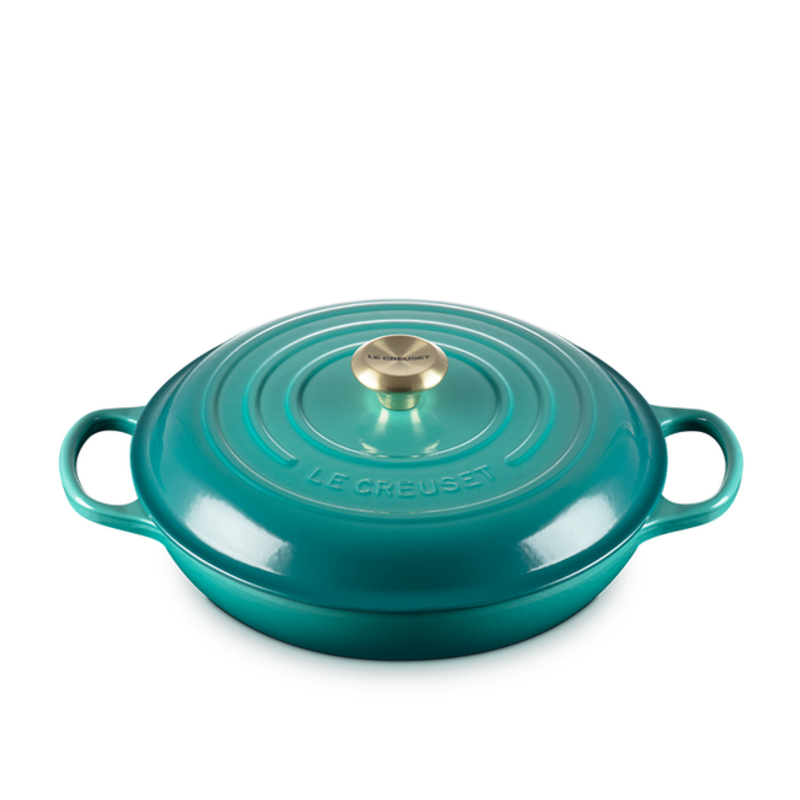
At Heart of the Home, our cast iron collection includes Staub and Le Creuset cocottes in a range of sizes. If you're thinking about investing in one, consider the size of your usual loaf, the weight you're comfortable lifting, and what else you'd like to cook in it.
Still deciding between cast iron and ceramic? Take a look at our guide to Cast Iron vs. Ceramic Dutch Oven for Bread: Which Gets the Better Crust?
A Few Things to Check Before Blaming Your Equipment
Sometimes the pot isn't the problem. If your bread isn't turning out quite the way you hoped, a few other things are worth checking.
- Oven temperature. Home ovens can run hotter or cooler than the dial suggests. An oven thermometer can help you check the actual temperature.
- Preheating. Follow your recipe's instructions for preheating the oven and baking vessel. If the vessel needs to be preheated, give it enough time to heat thoroughly.
- Steam and Browning. Steam helps keep the crust from setting too early, but the loaf generally needs an uncovered portion of baking time to develop its colour and crispness.
- Proofing time. Dough that hasn't risen enough, or has risen too much, can affect the loaf's shape and texture, regardless of what you bake it in.
Bread baking takes a little practice, and not every loaf will be perfect. That's part of learning. Make a note of what worked, adjust one thing at a time, and enjoy the process.
Let's Find What Works for Your Kitchen
You don't need every gadget or a cupboard full of specialty bakeware to get started. Sometimes the best way to discover what you need is to bake a few loaves and see what you enjoy making.
If you're ready to explore bread-baking tools, browse our Bread Baking & Tools collection online, or stop by Heart of the Home in Edmonton. We're always happy to talk through your plans, help you compare options, and find tools that earn their place in your kitchen.
Frequently Asked Questions
Can I use a regular pot instead of a Dutch oven?
Possibly, provided it's designed for oven use at the temperature your recipe requires. Check the manufacturer's instructions for the pot, lid, handles, and knobs before using it for bread baking. Not every pot or lid is suitable for high-temperature baking.
Does the size of the Dutch oven matter for bread?
Yes. A pot that's too small can restrict the loaf as it expands, while one that's much larger than necessary may not create the same close-fitting environment. Choose a size that suits the dough and loaf your recipe makes.
Do I need to preheat the Dutch oven before baking bread?
Many bread recipes call for a preheated Dutch oven to help with oven spring and crust development. Others use a cold-start method. Follow your recipe, and always check that your cookware is suitable for the method being used.
Is cast iron or ceramic better for baking bread?
Both can produce lovely bread when used according to their instructions. The best choice depends on the particular baker, its heat limits, how you prefer to handle it, and what else you'd like to cook in it. Our cast iron versus ceramic Dutch oven comparison explores the differences.
What bread-baking tools do beginners actually need?
You can start with a few basics: a mixing bowl, measuring tools or a kitchen scale, a suitable baking vessel or tray, and the ingredients your recipe calls for. Other tools, like a proving basket or dough scraper, can be useful as you bake more often, but you don't need to buy everything at once.
Our Beginner's Bread-Baking Toolkit: What You Actually Need (and What You Don't) is a helpful next read if you're building your bread-baking kit.
Leave a comment